

Your LED Wall Light glows, but the corner stays black. This happens because two walls pile up shadows there. Most fixtures are made to wash the wall, not to cover the corner. Wrong beam angles, thinking "more lumens" will fix it, spacing gaps, mounting height, and dark materials make it worse. Each fix below is something you can do, because dark spots are a layout problem, not a brightness problem.
Why Corners Stay Dark
Shadow Stacking at Corners
Picture a corner where two walls meet. Each wall blocks light from the other side. A single fixture aimed at the flat wall face lights that surface well. The corner pocket sits outside the beam, so it collects shadow from both directions. You get a bright wall and a black wedge beside it.
This is shadow stacking. Two shadow edges land on the same spot. The corner reads darker than either wall alone. No amount of extra output on that one fixture reaches the pocket, because the beam never points there.
Common Layout Mistakes
The first instinct is to buy a brighter fixture. That move backfires. A badly aimed light with more lumens overlights the wall face. The contrast between the hot wall and the dark corner grows sharper. Your eye notices the gap even more.
Spacing makes it worse. Most layouts spread fixtures evenly for a smooth wall wash. That rhythm leaves the last stretch before each corner uncovered. Dark or textured siding absorbs light instead of bouncing it back, so the gap looks deeper. Rough brick, stained wood, and dark paint all swallow the spill light you were counting on.
Walk your wall at night and watch where the pools end. The dark zones usually sit at the corners, not in the middle.
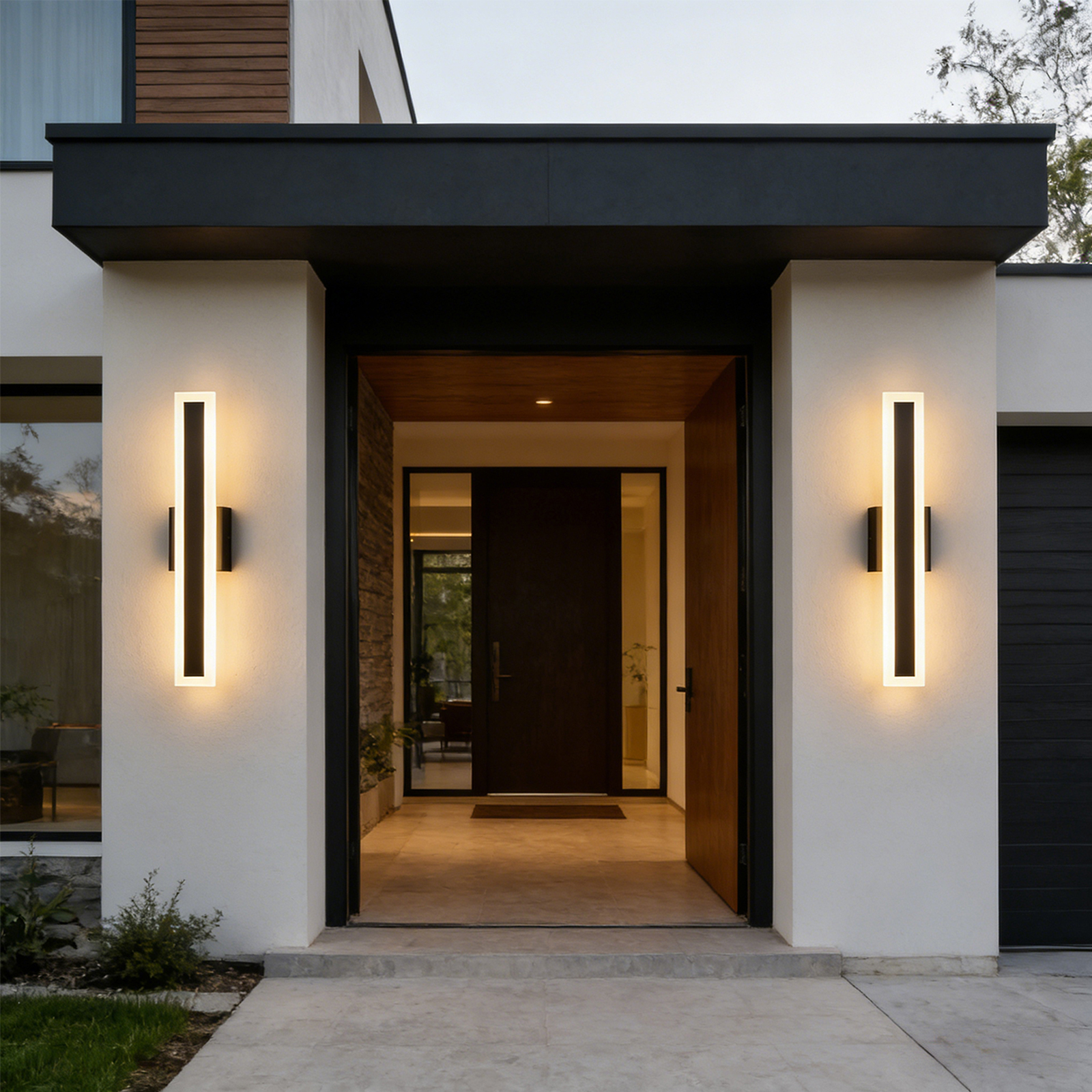
Placement Fixes for LED Wall Lights
Treat Corners as Zones
Stop extending your wall-wash rhythm around the corner. Treat each corner as its own lighting zone instead. A zone is a small area with its own fixture, its own aim, and its own job. That shift in thinking changes everything about how you place an LED Wall Light.
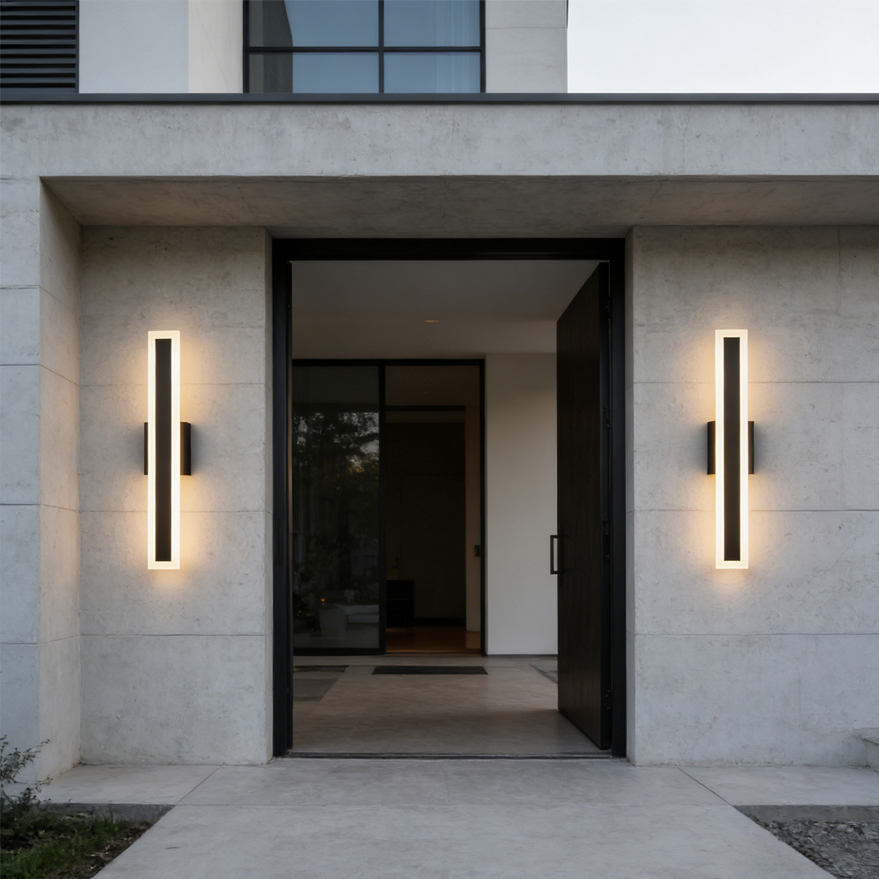
Light distribution matters more than output here. Wide flood patterns spread light everywhere and commit to nothing. Downward-directed and asymmetric beams push light where the corner needs it. They throw a controlled pool toward the ground and the wall junction. A downward-directed, warm-white fixture around 3000K with an IP-rated outdoor housing fits this job well. The Modern Outdoor LED Wall Light is one practical example of that fit. Warm white keeps the corner looking inviting, not clinical.
Spacing and Mounting LED Wall Lights
Check your spacing against the beam spread. Measure the pool each fixture throws at ground level. Set the next fixture so the pools overlap slightly. Overlap is what kills the dark gap. If the pools just touch, the seam between them stays dim.
Mounting height works the same way. Set the fixture high enough to clear heads and doors, yet low enough that the beam reaches the ground before it fades. A beam that dies halfway down the wall leaves a dark band at the base. Walk the wall with a tape measure and mark each pool's edge on the ground. That simple check shows you the gaps before nightfall does.
Plan the wiring early. Hardwired installation gives you a clean look with no cords crossing the patio. Non-dimmable fixtures simplify the circuit, so you can run more zones on one switch. Sketch your zones on paper first. Then confirm each LED Wall Light has power, aim, and spacing locked in before you drill.
Light Quality and Uniformity
Control Glare and Trespass
Glare ruins a good layout. Shield or aim each fixture so you cannot see the LED source from your seating area or from the street. A matte Black Wall Sconce helps here, since a dark housing blends into the wall and hides the bright edge. Skip over-bright fixtures too. They wash out the whole scene and make every shadow look harsher.
Light trespass is the neighbor problem. Aim your beams inside your property line. Then walk to the far side of the fence and check any wall that faces next door. If you can see the source or a hot patch on their siding, tilt the fixture down or add a shield.
Uniformity and Camera Visibility
Security cameras care about even light, not raw brightness. A single hot pool blows out highlights and leaves black gaps beside it. Overlapping pools fix that. Each camera frame then shows steady detail across the whole corner.
Here is a simple corner strategy you can run in one evening:
-
Map your dark zones after dark with a notepad.
-
Assign one zone per corner.
-
Choose a downward distribution for each LED Wall Light.
-
Set spacing and height so the pools overlap.
-
Re-check glare and trespass once everything is on.
Adjust one variable at a time. Then walk the space again at night.
Dark outdoor areas rarely need more lumens. They need uniformity and smart layout. So audit your whole system: corner zones, beam angles, spacing, mounting height, glare, and trespass. Change one variable at a time, then walk the space again after dark. Each LED Wall Light should overlap its neighbor and reach the ground. Fix the layout, and the shadows fade.